Cause of Action Institute at D.C.’s 2019 Small Business Expo

Yesterday, Cause of Action Institute (CoA Institute) joined hundreds of small business owners and entrepreneurs at the 2019 Small Business Expo in Washington D.C. CoA Institute has long been an advocate for protecting the economic rights and freedoms of small businesses, and connecting with stakeholders at this event proved this fight is still as important as ever.
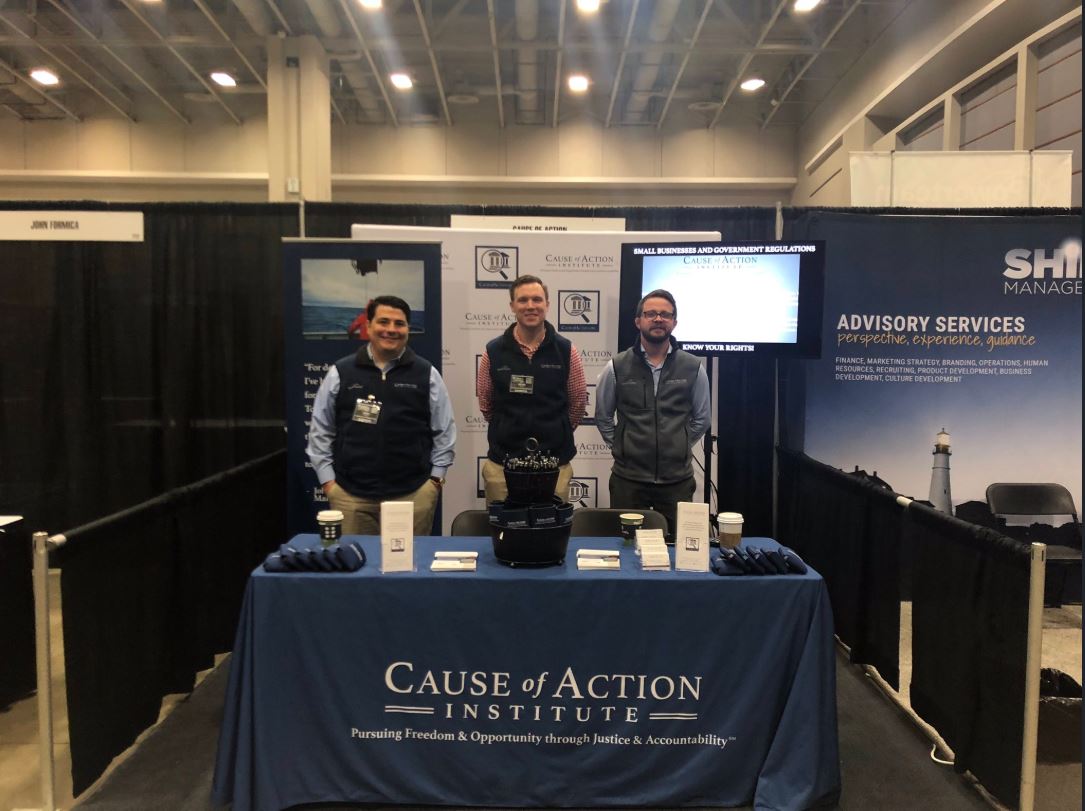
We have previously represented clients from various industries who have been impacted by burdensome regulations, and the people we connected with at the Expo continued to be representative of the diverse fields and industries impacted by these policies. We spoke with people who own businesses in fields such as healthcare, beauty, finance, and tech who all claim that regulations from several government agencies negatively impact their ability to grow or operate their business. Barriers created by issues such as unnecessary occupational licensing requirements hinder many small businesses, and the attendees at the Expo were no exception to these harms.
Small business owners represent some of the greatest examples of the economic opportunities available to Americans. However, costly and excessive regulations far-too-often limit the potential for many of these entrepreneurs. Government regulations should support and promote entrepreneurial endeavors and innovative operations, and CoA Institute will continue to fight against regulations that thwart these opportunities.

Mallory Koch is a communications associate at Cause of Action Institute.

CoA Calls on IG to Investigate Use of Government Owned Vehicles at EXIM Bank

Cause of Action Institute (CoA Institute), a nonpartisan government watchdog organization, sent a letter today to the Office of Inspector General (OIG) at the Export–Import Bank of the United States (EXIM Bank), requesting the EXIM Bank’s Inspector General investigate the use of government owned vehicles by EXIM Bank staff based on documents uncovered by Cause of Action Institute through a freedom of information request. The newly released documents reveal troubling evidence of EXIM Bank staff abusing the use of government owned vehicles.

Kevin Schmidt, director of investigations at Cause of Action Institute issued the following statement:

“We’re calling on the EXIM Bank’s Office of Inspector General to launch an investigation into what appears to be ongoing abuse and use of government vehicles by Bank staff.

“As a result of our own independent investigation, we’ve discovered what appears to be unauthorized use of government vehicles by Bank staff, lack of details in automobile use logs that are required under EXIM Bank policies, including staff leaving off the purpose for the use of government owned vehicles.

“As a financial institution with the power to hand out billions of dollars in federally subsidized and backed loans to corporations, all taxpayers should be concerned that the bank staff cannot seem to follow standard government automobile use protocols that are designed to prevent abuse and protect tax dollars.”

EXIM Bank’s OIG had previously investigated this matter in 2016, producing a report that included a detailed list of deficiencies by the Bank and Bank staffs’ use of government owned vehicles.

Letter and exhibits to the EXIM Bank’s Office of Inspector General

Questionable Vehicle Use

Ex-Im Vehicle Use Policy

2019.4.3 FOIA Request to Ex-Im Bank Vehicle Use


The Brief – April

Cause of Action Institute published its April newsletter today. You can read the newsletter here and subscribe to our monthly newsletter here. 

                                         Message from John

As we head into the warmer months, Cause of Action Institute is busy advancing our commitment to ensuring our government remains transparent and accountable to the people. During the month of April, we had staff travel to Dallas to present a CoA Institute paper, we filed an amicus brief before the U.S. Supreme Court, and secured a rare preservation order against a former DOJ employee who used her personal email to conduct official business.

As we continue to make strides towards a more free and open society, we hope you will take a moment to read over some of the work our team has done this month in pursuit of this mission.

Sincerely,
John J. Vecchione, president & CEO


You can read the rest of this month’s newsletter here. 

Auto-Tariff Investigation Sets Dangerous Anti-Transparency Precedent

Tariffs are often used as a costly tool that economically harms American consumers and business. These protectionist policies often invite turmoil and government overreach, and the tariffs proposed and implemented by the Trump Administration have been no different. In fact, with each round of proposed tariffs, it seems that the government has become less transparent about its process and rationale.

In an effort to advance its trade agenda, the administration has used four Section 232 investigations into different imports to justify tariffs on national security grounds. Although national security concerns may have a place in trade policy where there is a clear and narrow interest, Section 232 should not be used as a tool to bypass Congress when there is no legitimate national security threat. Nevertheless, this was the purported rationale of initiating the Section 232 investigation into auto imports despite the President’s assertion that the importation of autos and auto-parts themselves do not actually pose a national security threat.

So why was this investigation initiated and what did the U.S. Department of Commerce (Commerce) conclude from its investigation? Commerce proactively published its findings and documents supporting its case for steel and aluminum tariffs but refuses to do the same with its auto investigation.

After Commerce announced that it was launching a Section 232 investigation into the national security impacts of auto imports, they were required by law to notify the U.S. Department of Defense (DOD). Commerce announced that it sent notification of the investigation to then-Secretary of Defense James Mattis but have yet to release a copy of this notification, as they did with the Section 232 investigation into steel and aluminum tariffs, as well as with the uranium investigation.

In June 2018, one month after the investigation into auto imports was announced, Commerce Secretary Wilbur Ross told then-U.S. Sen. Orin Hatch that while Secretary Mattis accepted the proposition for the threats imposed by steel and aluminum imports, Commerce was not yet sure about DOD’s views for the automotive sector. Neither Commerce nor DOD has released the Defense Department’s response memo to the auto-import investigation.

Due to this lack of transparency, Cause of Action Institute (CoA Institute) sent FOIA requests to Commerce and DOD on March 22 seeking DOD’s response to the investigation and any relevant communication regarding this matter. The government has yet to release a substantive response from either agency regarding these requests.

The lack of transparency compared to the steel and aluminum process is stark. The government has announced that it will not be releasing Commerce’s final Section 232 report and recommendations on auto imports to the public. Not only were the reports for steel and aluminum published upon completion but the government is statutorily required to publish in the Federal Register “any portion of the report submitted by the Secretary under subparagraph (A) which does not contain classified information or proprietary information.”

CoA Institute believes that this information should be disclosed as the statute requires, particularly if it is going to be used to justify a potential 25 percent tariff on cars and car parts. This is why CoA Institute filed FOIA requests to Commerce for a copy of the report. After Commerce failed to respond to the request within the statutory timeline, CoA Institute filed a lawsuit against the Commerce Department.

It is troubling that the government is not upholding its legal obligations or open-government practices when it comes to Section 232 investigations. Larry Kudlow, director of the National Economic Council, stated that the administration may delay the decision on whether to impose auto-tariffs beyond the 90-day deadline that began when Commerce completed and provided the report to the White House. It is not clear how or what legal justifications exist to allow the administration to defer the decision beyond the May deadline.

However, the lack of transparency on this issue is not a new concern when it comes to tariffs. In September, after reports emerged of potential corruption in the tariff exemption process for the already controversial steel and aluminum tariffs, CoA Institute filed three FOIA requests seeking information to clarify the methodology behind the exemption process. After the government failed to respond to any of the FOIA requests relating to the steel and aluminum tariff exemption process, CoA Institute filed a lawsuit against Commerce for this information. As a result of the lawsuit, the government has agreed to produce relevant records at the end of each month.

Tariffs can be an economically treacherous policy, eroding the economic freedoms of individuals, hurting businesses, and almost always causing consumers to pay more for products as the government picks winners and losers. In this instance, not only is the government imposing tariffs that harm Americans, but it is doing so in a manner that evades transparency and, in regard to the auto-tariff report, fails to comply with its statuary obligations. The path to a stronger economy is one that eliminates barriers to trade, not one that unfairly manipulates the free-market while withholding justification from the public.

—

Mallory Koch is a communications associate at Cause of Action Institute.

Cause of Action Institute Secures Rare Preservation Order in Fight to Obtain DOJ Records Created on Personal Email Account

Government official caught using personal email to conduct official business ordered to maintain copies of all records in Gmail account

Washington, D.C. (April 26, 2019) – Cause of Action Institute (CoA Institute), a nonpartisan government watchdog organization, today announced it had secured a rare federal court order requiring a former U.S. Department of Justice (DOJ) employee to preserve the contents of her personal email account, which had been used to conduct official agency business. Those records may be subject to later release.

Ryan Mulvey, counsel for CoA Institute, issued the following statement:

“Government transparency is a fundamental necessity in a free and open society. The use of personal devices to conduct official business remains a serious concern, resulting in records being lost, unsecured, or improperly destroyed. In some cases, personal email accounts are used to avoid disclosure altogether. This court order is an important reminder to all government employees to avoid using personal email and devices and adhere to all relevant agency rules and government transparency statutes. It also is a warning to agencies to ensure that they meet their record-keeping obligations.”

U.S. District Court Judge Amit Mehta granted Cause of Action’s motion, ordering the U.S. Department of Justice to require a former employee, Sarah Isgur Flores, not to delete any emails stored in her personal Gmail account, and to store copies of the account’s contents onto a thumb drive or other storage device, including all emails in archived or deleted folders. The Court also ordered Ms. Flores to maintain the emails until further instructed, and gave the U.S. Department of Justice until May 2, 2019 to provide notice of its compliance with the preservation order. Although the issuance of such a preservation order is rather rare, it is the latest example in a developing trend. Federal courts have become increasingly concerned about the use of personal email to conduct agency business, and they are taking serious the possible loss or destruction of government records that may be subject to the Freedom of Information Act (FOIA) and other federal records management statutes, including the Federal Records Act.

Background

In 2017, media reports indicated that Sarah Isgur Flores, then-spokeswoman for Attorney General Jeff Sessions, used her personal email to issue official statements on behalf of the government. Due to concerns that this sort of behavior could harm the public’s access to official records, and in light of past instances of personal email having been used as a way to conceal public information, Cause of Action Institute filed a FOIA request for Ms. Flores official work-related emails sent or received through her personal devices or accounts. After waiting more than 18 months for a response, CoA Institute sued DOJ to force the disclosure of the Flores records.

On September 27, 2018, DOJ responded, “As is evident from the enclosed records, Ms. Flores forwarded emails sent to her personal account to her official Department of Justice email account, including through an automatic forward. As such, all of these emails were located pursuant to our search of Ms. Flores’ official Department of Justice email account.”

However, within the 112 pages produced by DOJ, the original email issued by Ms. Flores, as reported by members of the press, was missing. Despite raising this issue with DOJ, the government insisted the 112 pages were a full-and-complete record. As a result, and after learning of Ms. Flores’s departure from public service, CoA Institute filed a motion, urging the court to compel DOJ and Ms. Flores to preserve all relevant records.

Late on Thursday, April 25, the Court granted CoA Institute’s motion in full, compelling the government to coordinate with Ms. Flores to preserve her personal email account and maintain copies pending further court proceedings.

-30-

CoA Institutes’s Motion for Preservation Order

Federal Court’s Order for Preservation of Records 

Related Stories:


CoA Institute Files Amicus Brief in FTC v. AMG Capital Management

On March 14, 2019, Cause of Action Institute (CoA Institute) filed an amicus brief in the Ninth Circuit in support of an en banc petition to rehear a three-judge panel ruling for the Federal Trade Commission (FTC) in FTC v. AMG Capital Management, LLC, et al., No. 16-17197.

This case addresses the important issue of the power of the FTC to take businesses’ property without the due process protections Congress has placed around such confiscation. Here, for example, the FTC used Section 13(b) of the FTC Act to obtain a judgement of over one billion dollars against AMG Capital Management, LLC (AMG) for practices that the FTC (which began its investigation in 2002) never notified AMG were, in the FTC’s view, unlawful until it sued a decade later in 2012. Congress, however, only provided the FTC with power to obtain such relief under Section 19 of the FTC Act, which established a number of procedural safeguards that ensure companies’ ability to defend themselves, including a requirement that the FTC must prove that the defendant knew or should have known its actions were wrongful and a three-year statute of limitations. Section 13, on the other hand, was enacted so that the FTC could quickly get preliminary injunctive relief to stop a company from doing harm to consumers if it could show an ongoing, current violation.

The FTC, in keeping with the tropism of agencies to aggrandize their power beyond Congressional limitations, set out to persuade the judiciary that Section 13(b) allowed the agency, through “ancillary” relief under equity, to get the same confiscations Congress allowed under Section 19. The Ninth Circuit long ago accepted this argument. In this case, however, two Judges ruling for the FTC stated that they had to rule that way as precedent demanded it, but that the larger Ninth Circuit (by an en banc panel) should review the case and change that Circuit’s precedent in light of subsequent Supreme Court rulings, notably, Kokesh v. Securities and Exchange Commission, 137 S. Ct. 1637 (2017).

The amicus brief focuses on the long-term strategy of the FTC to lead the Courts astray on what Congress had allowed and not allowed by enacting specific sections of the FTC Act to do different things. The Washington Legal Foundation and the Chamber of Commerce also urged in amicus briefs that the Ninth Circuit take up this case to right a legal error of the past.

Our full amicus brief can be view here.

John J. Vecchione is President and CEO at Cause of Action Institute.

CoA Institute Presents Winning Research Paper at 2019 National Freedom of Information Coalition Summit

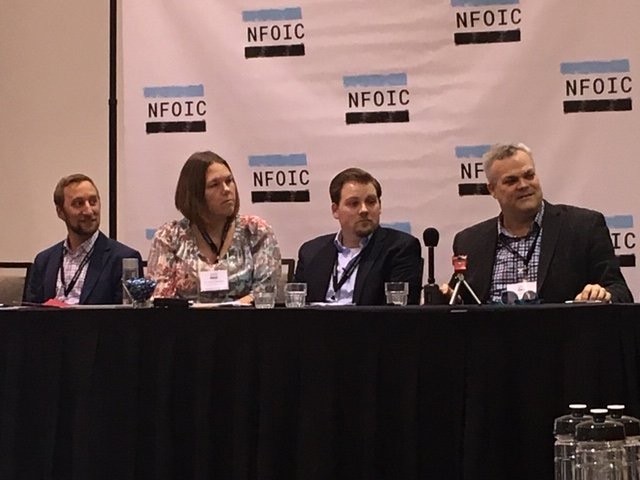
On Friday, April 12, Cause of Action Institute (CoA Institute) Counsel Ryan Mulvey joined a panel at the National Freedom of Information Coalition’s (NFOIC) 2019 Annual Freedom of Information (FOI) Summit in Dallas, Texas to present a winning research paper co-authored by Mulvey and CoA Counsel and Senior Policy Advisor James Valvo. The paper presents a comprehensive survey of open records laws and identifies useful trends in how public access to legislative records is regulated at the state and federal levels. Ryan and James’ paper was one of three to be presented on a panel from 18 total submissions for the contest. Their underlying research evolved out of work originally undertaken for an amicus brief filed in the Georgia Court of Appeals.

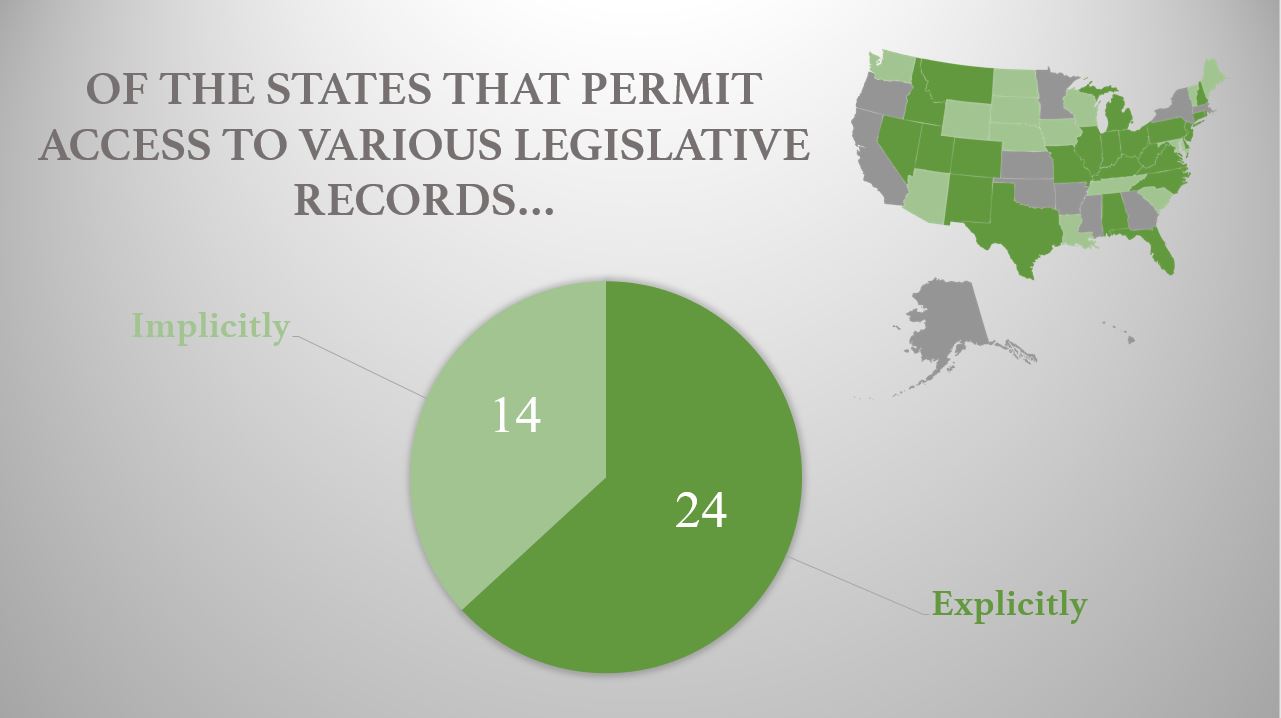
The paper, “‘Opening the State House Doors’: Examining Trends in Public Access to Legislative Records” examines how all 50 states’ FOI laws address the question of access to legislative records. That survey reveals that 38 states provide some form of access to various legislative materials. Only 11 exclude the legislative branch from their public-disclosure laws, whether expressly, by implication, or according to judicial interpretation. The clear trend, in any case, is to construe state FOI laws in favor of public access.

Of the 38 states that provide requesters with at least some basic level of access to legislative records, 14 do so implicitly while the other 24 explicitly allow access to legislative records.

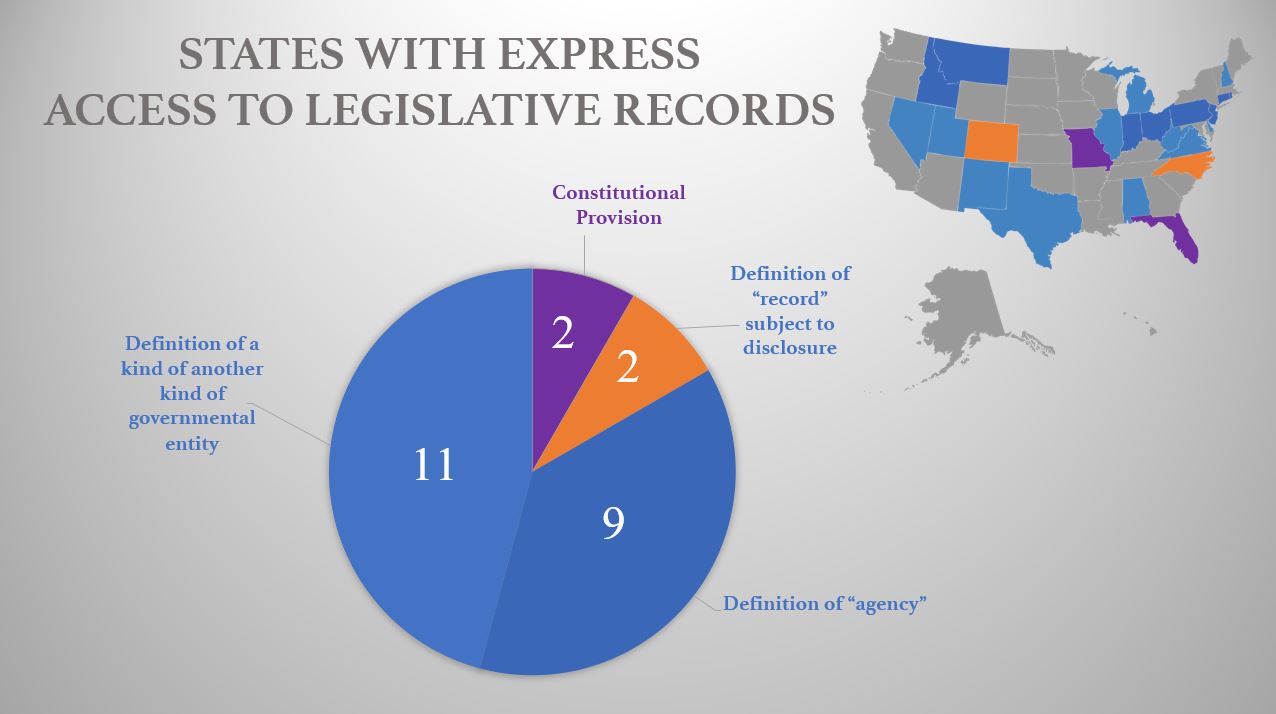
Of the states that explicitly cover the legislature in their FOI laws, there is some diversity in how the branch is included. For example, in two states the law focuses on the nature of the record subject to disclosure. North Carolina defines a “public record” to include materials “made or received” by a “public office,” including that of an elected official. Another 20 states focus on the kinds of government entities that must disclose their records upon request, including nine states that define an “agency” to include the legislature or legislative offices. Finally, in Missouri and Florida, access to legislative records is guaranteed by the state constitution.

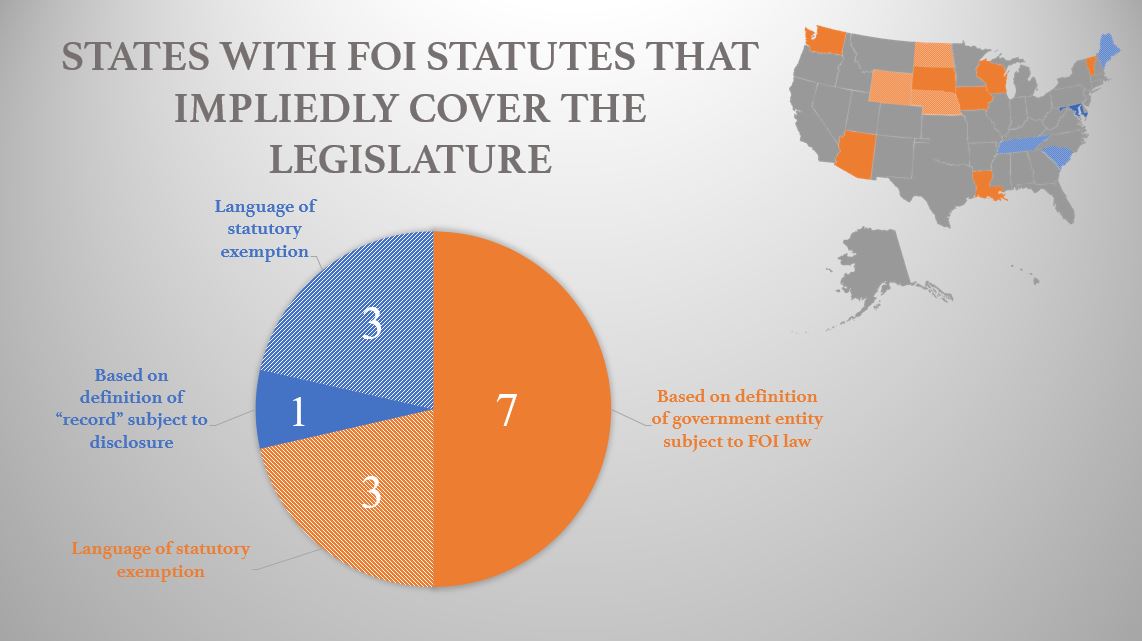
Ryan and James identified 14 states that impliedly grant access to legislative records. Ten states do so based on the interpretation of terms defining the governmental entities subject to disclosure. For example, six states use the term “branch,” which is understood to include the legislature. Four states define the sort of record subject to disclosure in such a way to include legislative materials. And in six states, the presence of statutory exemptions—or protections that allow a record custodian to withhold information—only applicable to certain legislative records suggest that the legislature, as a whole, is subject to the FOI statute.

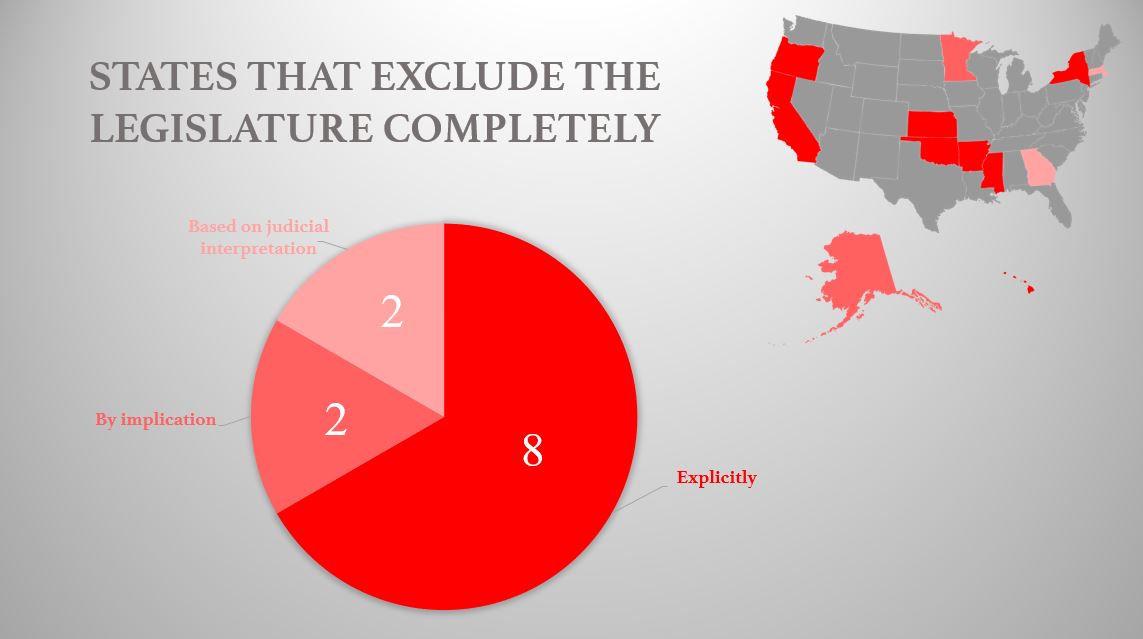
Finally, the survey found that of the 12 states that completely exclude the legislature from their FOI statutes, eight do so explicitly, two implicitly, and two based on judicial interpretation.

In addition to surveying state law, Ryan and James examined the treatment of legislative records under the federal FOIA. Specifically, they discussed the possibility that courts could look more seriously at the availability of records under the control of legislative branch agencies, and they pointed to the positive development in the case law governing the extension of congressional control over records that reflect the interaction of the federal legislature and the Executive Branch.

The full paper can be viewed here. The findings discussed above, and the graphics excerpted from the panel presentation, reflect developments in three states (Missouri, South Carolina, and Michigan) that are not discussed in the paper.

–

Ryan Mulvey is counsel at Cause of Action Institute. Mallory Koch is a communications associate at Cause of Action Institute.